
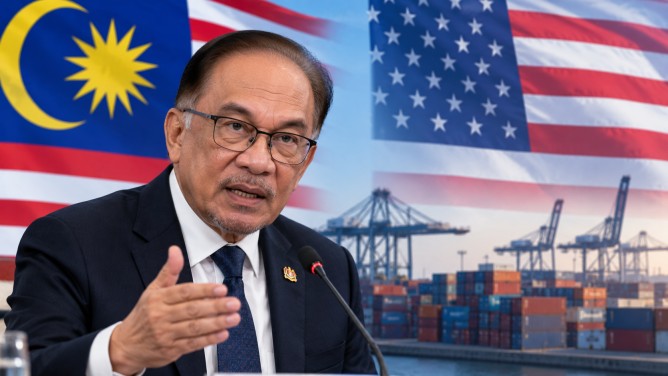
Malaysia should not view the existing 10% tariff imposed by the United States on its goods as a fixed limit, cautioned industry expert Datuk Seri R. Jeyenderan. He emphasized that the U.S. might implement further measures if it finds Malaysia’s response to issues like structural excess capacity and transshipment controls unsatisfactory. Jeyenderan advised Malaysian exporters to stay vigilant amid the ongoing U.S. investigation.
To navigate this situation effectively, Jeyenderan urged the Investment, Trade and Industry Ministry (MITI) and the Customs Department to gather verified industry data. He stressed the importance of enhancing cargo traceability and ensuring the rigorous enforcement of trade and labor regulations to address U.S. concerns.
A key focus, according to Jeyenderan, should be on bolstering transshipment controls. This is crucial to prove that goods labeled as Malaysian are genuinely produced within the country and not merely passing through from other origins. Such measures are vital to alleviate suspicions during the U.S. investigation.
Furthermore, Jeyenderan called for greater clarity on the rules concerning petroleum cargo storage, blending, declarations, and tax treatments. This would help minimize business uncertainties and strengthen Malaysia’s stance in discussions with the U.S. authorities. He emphasized the need for Malaysia to promptly and transparently address any weaknesses identified during the investigation, showcasing that its trade regulations are robustly implemented, monitored, and enforced.