
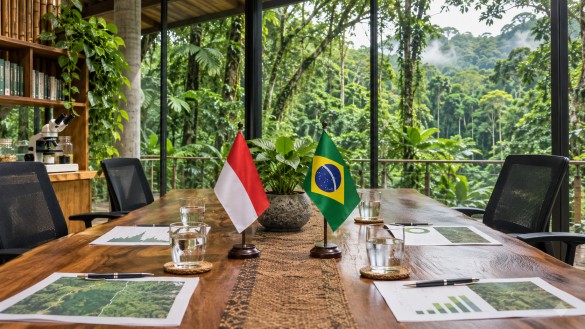
Indonesia and Brazil are considering enhanced collaboration in the realm of tropical forest conservation, with a focus on sustainable management, conservation financing, and carbon certification. The discussions, which occurred during the 31st UN Climate Change Conference (COP31) in Antalya, Türkiye, also emphasized improving the livelihoods of communities dependent on forest resources.
Key topics of interest include the exchange of expertise and the development of strategies that link environmental protection with community development. Indonesia is particularly interested in Brazil’s approach to supporting Amazon communities by integrating forest conservation with essential services such as clean water, solar energy, internet access, and food security.
Both nations are exploring Brazil’s Amazon Fund as a possible model for bolstering conservation financing. This fund leverages international support and results-based funding mechanisms to achieve its goals. Additionally, Brazil’s carbon credit certification system, Ecora, was highlighted for its focus on enhancing the credibility of carbon credits through scientific methods and transparent governance.
Indonesia aims to learn from these initiatives to strengthen its own carbon certification framework in support of its Forestry and Other Land Use (FOLU) Net Sink 2030 target, alongside social forestry and ecosystem restoration programs. The collaboration seeks to improve carbon market transparency and attract investments in conservation.
The discussions also included the potential for technical cooperation involving government agencies, universities, civil society organizations, and development partners. Plans are underway to draft a joint white paper outlining partnership opportunities and to organize a technical workshop in early 2027. The proposed collaboration aims to advance tropical forest protection while supporting the economic development of forest-dependent communities.