
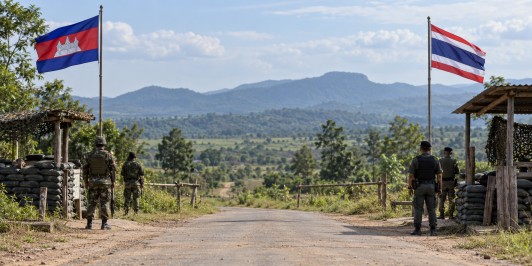
The Cambodian government has asserted that its ceasefire agreement with Thailand should not serve as a basis for establishing new international borders or determining ownership of contested areas. Cambodian Information Minister Neth Pheaktra emphasized that the agreement, which took effect on December 27, was reached to maintain existing military positions and ensure the safety of displaced civilians.
Despite the agreement, tensions remain as Pheaktra accused Thai forces of fortifying positions in disputed areas claimed by Cambodia. These actions reportedly include the installation of barbed wire, the construction of trenches, roads, and military facilities. Cambodia argues that such developments could alter the status quo rather than uphold it.
The conflict has led to the displacement of over 20,000 people, according to Cambodian officials. The safe and secure return of these civilians is seen as a critical indicator of the ceasefire’s effectiveness, as noted by Pheaktra.
In a related move, Thailand has been conducting tours for foreign delegates, ASEAN observers, and international journalists to showcase its claims over certain areas near the border. This includes the O’Smach casino and Choam crossing areas, where Thailand alleges cross-border criminal activities and unauthorized use of casino buildings.
The contested areas remain a point of contention, with Cambodia disputing Thailand’s control and asserting that the territory rightfully belongs to Cambodia. Both nations continue to navigate these complex diplomatic challenges amid ongoing regional and international scrutiny.