
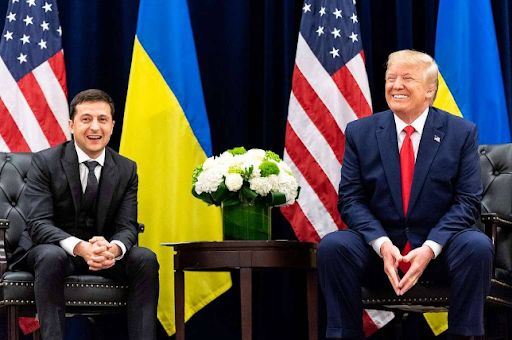
President Donald Trump, a leader who has long campaigned against “endless wars,” heard a compelling pitch for peace from Ukrainian President Volodymyr Zelensky on Saturday. During a phone call, Zelensky leveraged Trump’s recent success in Gaza to argue that the nearly four-year-long war in Ukraine can, and should, be brought to an end.
The call tapped directly into Trump’s core political messaging. Zelensky’s central premise—”If a war can be stopped in one region, then surely other wars can be stopped as well”—resonates with a US president who has made ending long-standing conflicts a hallmark of his foreign policy. Trump has been vocal about his desire to “stop the killing” in Ukraine specifically.
Zelensky’s approach was tailored to his audience. He didn’t just ask for peace; he presented a strategy for achieving it that aligns with Trump’s worldview. His assertion that “real diplomacy” must be “achieved through strength” provides a clear, decisive framework that appeals to a preference for negotiation from a position of power.
The discussion of strengthening Ukraine’s air defenses fits perfectly into this framework. It allows the Trump administration to frame its military support not as a perpetuation of war, but as a necessary investment to create the leverage needed to end it. This addresses the potential criticism of being drawn deeper into a conflict.
By framing his needs in a way that aligns with Trump’s own political brand and stated goals, Zelensky made a powerful case. He presented the end of the “Russian war” not as a complex problem without a solution, but as the next logical challenge for a president committed to ending America’s involvement in endless conflicts.