
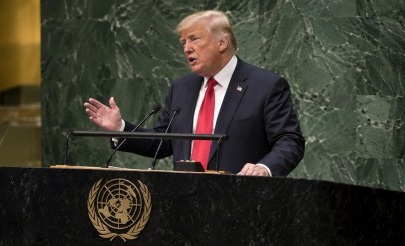
During his address at the United Nations General Assembly in New York, U.S. President Donald Trump proposed a shift in terminology for artificial intelligence (AI), suggesting the use of “super intelligence” in future government documents. Trump argued that the term “artificial” diminishes the perceived capabilities of the technology.
Trump also dismissed international calls for stringent controls on AI, maintaining that the development of such technology should proceed without broad international regulations. He described concerns about AI’s potential dangers as overstated and expressed opposition to establishing a global system for AI oversight.
Amid ongoing debates among governments and tech companies on managing advanced AI systems, Trump’s stance contrasts with more than 20 political leaders who have advocated for enhanced international cooperation, safety standards, and testing protocols. These leaders emphasize the need for common standards to manage the rapidly advancing technology.
Furthering his vision, Trump proposed the creation of an “AI Force” and the appointment of an AI czar to oversee the technology within the United States, though details on how this structure would function remain sparse. The administration’s proposal aims to bolster national oversight of AI development.
Trump’s suggestion of the term “superintelligence” adapts a concept already recognized in AI research. Traditionally, it refers to a hypothetical system with intellectual capabilities surpassing human abilities across a broad range of tasks. Trump’s broader application of the term seeks to redefine how the U.S. government perceives and communicates about AI.