
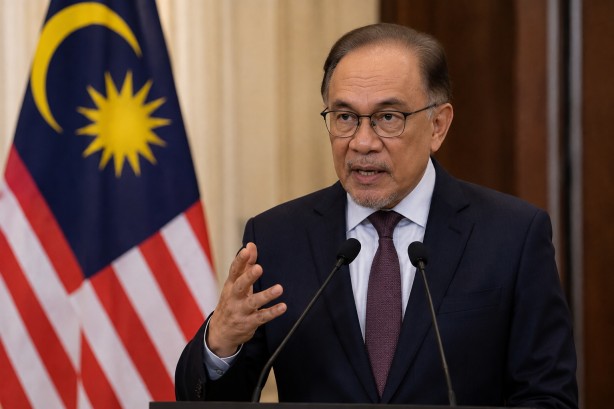
Malaysian Prime Minister Anwar Ibrahim has reaffirmed his country’s adherence to the One China policy, stating that he views Taiwan as part of China. This statement has garnered approval from Beijing but has been met with disapproval from Taipei. Anwar emphasized Malaysia’s commitment to a peaceful resolution regarding the tensions between China and Taiwan. The One China policy, which Malaysia has observed since establishing diplomatic relations with Beijing in 1974, involves recognizing the People’s Republic of China as the legitimate government and acknowledging its stance on Taiwan while advocating for stability across the Taiwan Strait.
China welcomed Anwar’s remarks, interpreting them as an endorsement of its perspective on Taiwan. In contrast, Taiwan rejected the assertion, maintaining its position that it is not a part of China and cautioning that such statements might exacerbate concerns about military pressures. Despite no formal diplomatic ties with Taiwan, Malaysia and Taiwan maintain extensive economic, cultural, and technological relations through their respective representative offices.
Anwar’s comments could potentially affect Malaysia’s dynamic with Taiwan, especially impacting Taiwanese businesses and investors wary of geopolitical uncertainties. Nonetheless, Malaysia is expected to continue its strategic balancing act, nurturing its robust relationship with China while sustaining economic interactions with Taiwan. The economic connection remains significant, as trade between Malaysia and Taiwan reached $54.49 billion in 2025, positioning Taiwan as one of Malaysia’s key trading partners.
While diplomatic differences persist, the economic stakes for both Malaysia and Taiwan are substantial, potentially driving continued collaboration. The situation underscores the delicate diplomatic and economic balancing act Malaysia must perform, as it navigates its commitments to both China and Taiwan amidst regional and global political complexities.