
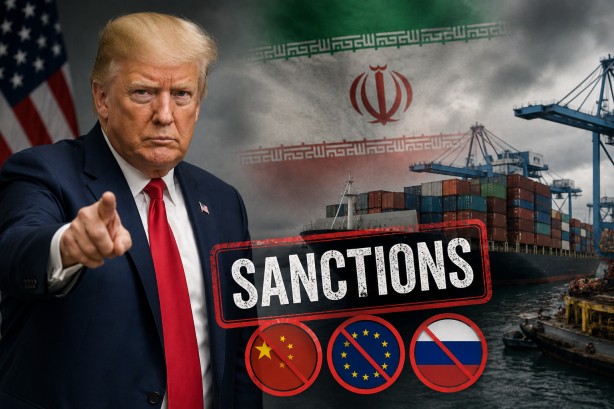
The United States has issued a stern warning of significant sanctions against countries and companies that persist in economic relations with Iran. This move is part of Washington’s intensified strategy to sever Tehran’s connection to international revenue streams. US Treasury Secretary Scott Bessent announced that the focus would be on entities involved in facilitating revenue-generating transactions for Iran, particularly those linked to Iranian oil sales or financial activities. Nations and businesses continuing their engagement with Tehran could face deadlines to terminate their dealings or risk US sanctions.
This warning has sparked concerns about a potential standoff with China, which is Iran’s most significant trading partner and a primary buyer of its oil. China has criticized the US pressure campaign, advocating instead for political and diplomatic solutions over the implementation of sanctions. In response, Iran has threatened to retaliate against those participating in the US-led initiative, with officials hinting at possible military or cyber responses.
The recent US measures come amidst ongoing tensions over Iran’s nuclear program and the strategically vital Strait of Hormuz, a key channel for global energy supplies. The US has applied economic restrictions to curtail Iranian oil exports, while Iran has sustained pressure on shipping through this critical waterway. The US asserts that its economic campaign aims to compel Tehran to alter its course following unsuccessful military efforts to achieve broader objectives, though officials have indicated that military action remains on the table.
The threat of sanctions has already begun to impact Iran’s trade relationships. The United Arab Emirates has announced a halt to trade with Iran, reflecting the influence of the US measures. Meanwhile, Turkey, another major trading partner with Iran, has not yet announced its stance in response to the new US actions.