
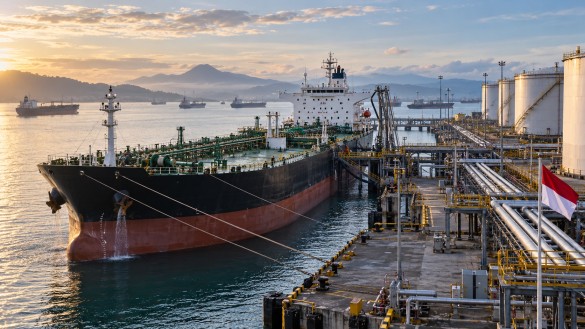
Indonesia is actively seeking to diversify its gasoline imports by pursuing new agreements with India and China, aiming to reduce its reliance on Singapore, a key regional oil refining hub. Energy Minister Bahlil Lahadalia announced plans to visit India, China, and other nations to explore possible supply deals. These efforts align with President Prabowo Subianto’s directive to secure long-term contracts and enhance the country’s energy security.
Historically, Indonesia has depended significantly on Singapore for its gasoline imports, particularly RON 90 gasoline, although Bahlil did not explicitly name Singapore in his recent comments. This shift towards diversification comes amid escalating tensions between the two countries concerning energy supplies. Recently, Indonesia decreased its pipeline natural gas exports to Singapore by about 31 billion British thermal units per day.
Bahlil asserted that the reduction in gas exports was within the contractual limits, ensuring that Indonesia was not breaching its agreements. In response, Singapore has stated that the cutback represents a minor portion of its daily gas requirements and is unlikely to significantly impact electricity prices. Nevertheless, Singaporean Prime Minister Lawrence Wong has emphasized the importance of suppliers fulfilling their contractual obligations.
In light of these developments, Singapore’s Foreign Minister Vivian Balakrishnan is anticipated to meet with Indonesian Foreign Minister Arrmanatha Nasir to address the ongoing energy-related disputes. As Indonesia seeks to secure alternative gasoline suppliers, it underscores a broader strategy to diversify energy sources and bolster national energy security by reducing dependence on a single trading partner.